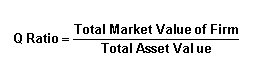
For example, a low Q (between 0 and 1) means that the cost to replace a firm's assets is greater than the value of its stock. This implies that the stock is undervalued. Conversely, a high Q (greater than 1) implies that a firm's stock is more expensive than the replacement cost of its assets, which implies that the stock is overvalued. This measure of stock valuation is the driving factor behind investment decisions in Tobin's model.
This method can also be applied to the stock market as a whole. It's a fairly simple concept, but time consuming to calculate for the whole market. The Q Ratio is the total price of the market divided by the replacement cost of all its companies in the market. Fortunately, the government does the work of accumulating the valuation data for the calculation. The numbers are supplied in the Federal Reserve Flow of Funds Accounts of the United States, which is released quarterly.
Below is historical chart of Q ratio using the data:

The average Q ratio for the stock market is about 0.71. The all-time Q Ratio high at the peak of the Tech Bubble was 1.82 - which suggests the stock market price was 158% above the historic average replacement cost of 0.71. The all-time lows in 1921, 1932 and 1982 were around 0.30, which is about 57% below replacement cost. Interesting how the extremes in the Q Ratio (highs and lows) have corresponded closely to high and lows in the stock market. Of even greater interest is the reading of 0.69, which is right around the historical average of 0.71, occurred after the tremendous stock market decline in 2008/2009. One would think this number would have been much lower than 0.69 given the severity of the downturn in the market.

